In September 2026, we commemorate 190 years since a singular episode in local history: the Battle of Villarrobledo.
From the Historical and Heritage Association «La Bravera de Villarrobledo», we have prepared a historical itinerary that covers the main areas of the town where the famous battle took place.
Historical Context
Year of 1833. The death of Ferdinand VII placed his daughter, the then Princess of Asturias Isabel II, barely three years old, on the Spanish throne under the regency of her mother, María Cristina of Bourbon-Two Sicilies. This event provoked the anger of the late king’s brother, Infante Carlos María Isidro, who, together with his supporters, declared war on the newly established government of his niece. To remain in power, the queen allied herself with the liberals, while the other claimant to the throne championed the cause of royal absolutism.
More than a family dispute, the newly begun First Carlist War was a confrontation between liberal principles —individual freedom, national sovereignty, civil rights, and private property— and the absolutism represented by Carlism-God, homeland, regional charters (fueros), and king.
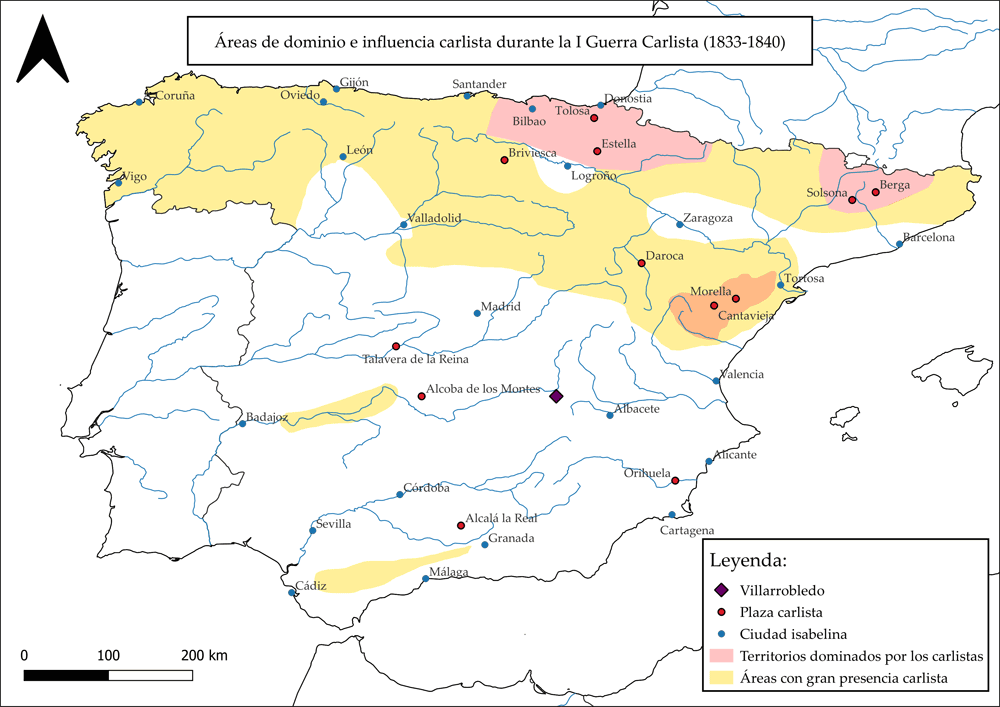
Supporters of the Isabelline regime controlled most of the Spanish state, while the main Carlist strongholds were concentrated in the Basque provinces, the Catalan Pyrenees, and the Maestrazgo region—between Catalonia, Valencia, and Aragon. To relieve the liberal pressure faced by the absolutists in the northern theatre of operations, in June 1836 a military expedition was launched under the charismatic Miguel Gómez, who departed from the town of Amurrio (Álava) with about 2,780 troops heading west, aiming to expand the zones of conflict.
In August of that same year, Gómez planned an attack on Madrid, but lacking sufficient soldiers to take the Spanish capital, he redirected his march toward the eastern peninsula, joining forces with the Carlist leader of the Maestrazgo, Ramón Cabrera, in Utiel (Valencia), who contributed some 3,460 troops.
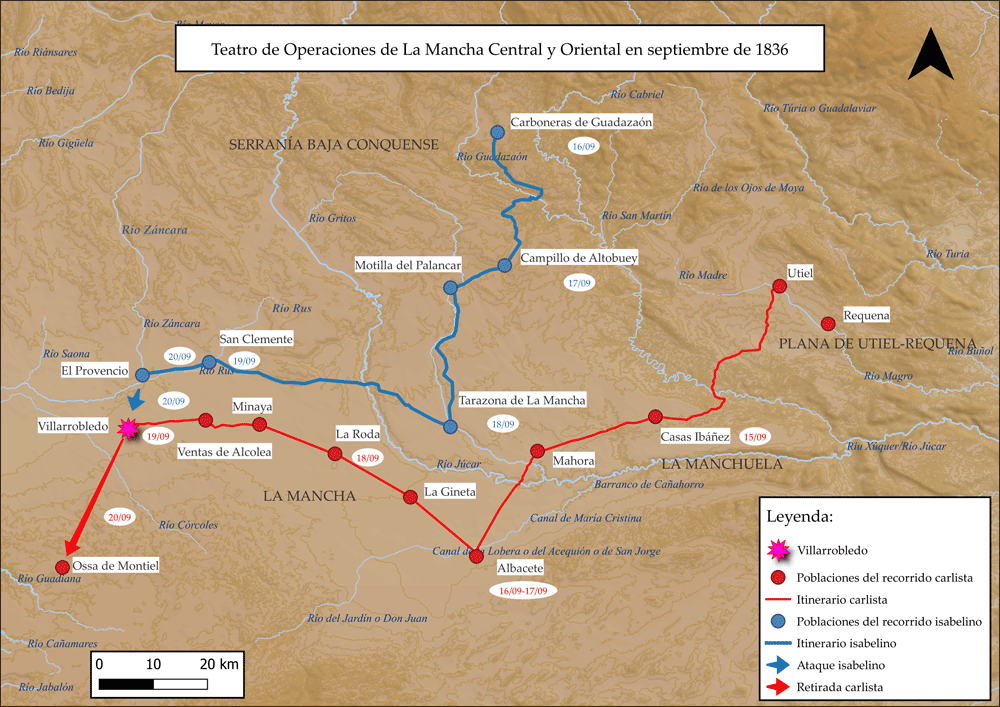
Once reinforced, the Carlist column left Utiel on 15 September 1836 toward Madrid. They passed through Casas Ibáñez (15 September), Albacete (16-17 September), La Roda (18 September) and finally reached Villarrobledo on 19 September. They were not alone: a liberal expedition had long been pursuing them, commanded by Isidro Alaix —replacing Baldomero Espartero— whose 4,500 infantry units were joined by 210 cavalrymen led by Diego de León, commander of the Princess’s Hussars Regiment, the finest mounted unit of the conflict.
The liberal forces departed on 16 September from Carboneras de Guadazaón (Cuenca), continued through Campillo de Altobuey (17 September), Tarazona de la Mancha (18 September) and San Clemente (19 September), aiming to intercept the Carlists in Villarrobledo at dawn on 20 September.
Villarrobledo in the First Third of the 19th Century
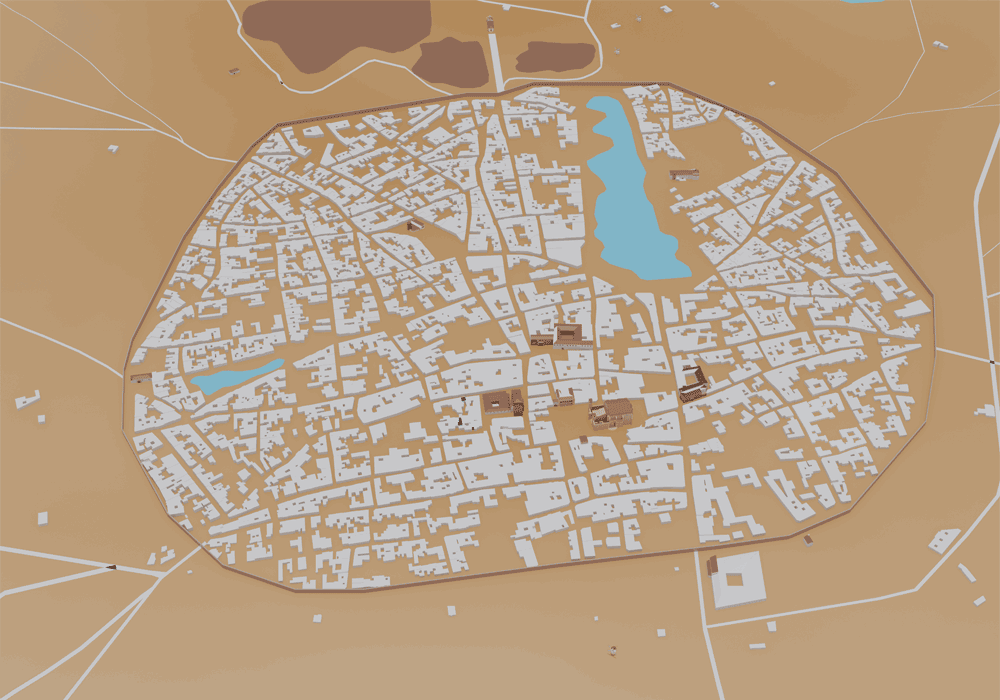
At the time in question, Villarrobledo had a population of approximately 8,000 inhabitants. Since 4 July 1836, it had been incorporated into the province of Albacete, within the administrative jurisdiction of the judicial district of La Roda.
The town was set within a complex lacustrine environment, the most notable feature of which was the lagoon known as La Vega de San Cristóbal, located south of the settlement and formerly responsible for the name Villarrobledo de la Vega.
As the urban centre expanded, it also absorbed a large lagoon commonly known as Los Carrillos, from which flowed a watercourse called el Corredero, feeding the southern water basins while running toward the Záncara River.
Because Villarrobledo stood on a series of elevations overlooking the surrounding wetlands, runoff also fed the lagoons located east and north of the town.
The abundance of water made Villarrobledo’s soils particularly fertile, resulting in plentiful agricultural production that granted the town both fame and economic importance.
Holding the status of Villa, Villarrobledo was protected and delimited by a defensive wall. It was a fortification built of rammed earth (tapial), equipped with loopholes that facilitated the defence of the settlement.
Within its walls, the population was distributed across different productive areas. The town’s nerve centre was the Plaza Vieja —today Plaza de Ramón y Cajal— where the main civil and religious buildings were located, along with the residences of the local political and economic elite.
The largest social group, the peasantry, lived irregularly and in a dispersed manner across most of the town-generally with fewer economic resources. They tended to reside near the gates of the wall, which provided more direct access to farmland. Most belonged to landless day labourers serving the local landowning elites, tenants, and, to a lesser extent, sharecroppers.
Of particular renown was the tinajero district, located north of the Corredero del Agua, where many of the ceramic-production infrastructures —known as tinajerías— were concentrated.
This industrial district extracted the raw materials it needed from the abundant clay deposits north of the wall, whose exploitation shaped a mining landscape of areneros (open-pit workings) and barreros (underground workings).
Also linked to local industry, the surroundings of Villarrobledo featured mill clusters situated on the main elevations around the town, especially along the Camino Real de Cuenca to the north and the Vega de San Cristóbal to the south.
The mercantile district must also be mentioned, located mainly near the lagoon of Los Carrillos, which offered an open space for most local commercial transactions.
Finally, in the religious sphere, the hermitages of Santa Ana, the Virgin of Charity, and San Cristóbal, as well as the Convent of San Francisco, were all located outside the town walls.
The Battle Route
Contrary to the common idea of military actions —two armies clashing in an open field free of obstacles— the action at Villarrobledo unfolded in two main settings: inside the town and the plains to its south.
As will be explained in more detail in the following pages, the battle began with the Isabelline assault on the town through the northern gate, which they entered with hardly any resistance.
After a series of engagements along the main streets —those that structured the urban layout from the wall’s entrances toward the town centre: Plaza Vieja as the political district and Los Carrillos as the commercial district— the Isabelline forces succeeded in taking Villarrobledo itself.
The best-known part of the confrontation took place in the Vega de San Cristóbal, south of the town, where the Carlists mounted fierce resistance against the liberal attackers. After several intense clashes and a brief stalemate —during which the Isabellines held a slight advantage— the Isabelline cavalry launched a series of charges against the Carlist rear, ultimately forcing the absolutist forces to retreat and securing victory for the supporters of the young queen Isabel II.
Thus, following the route of the action at Villarrobledo allows visitors to experience first-hand a chapter of Spanish history while simultaneously immersing themselves in the Manchegan culture of Villarrobledo.
First Phase: Fighting Within the Town Walls
First Stop
Calle de la Virgen: Northern Gate of the Town Wall
The 20 of September of 1836. After a long pursuit, the Isabelline force commanded by Isidro Alaix and Diego de León finally intercepted in Villarrobledo the Carlist expedition led by Miguel Gómez and Ramón Cabrera, whose objective was to take Madrid.
Aware that an Isabelline contingent was pursuing them, the Carlist officers failed to reach an agreement on how to proceed: Cabrera insisted on preparing for the imminent attack on Villarrobledo, while Gómez dismissed the possibility.
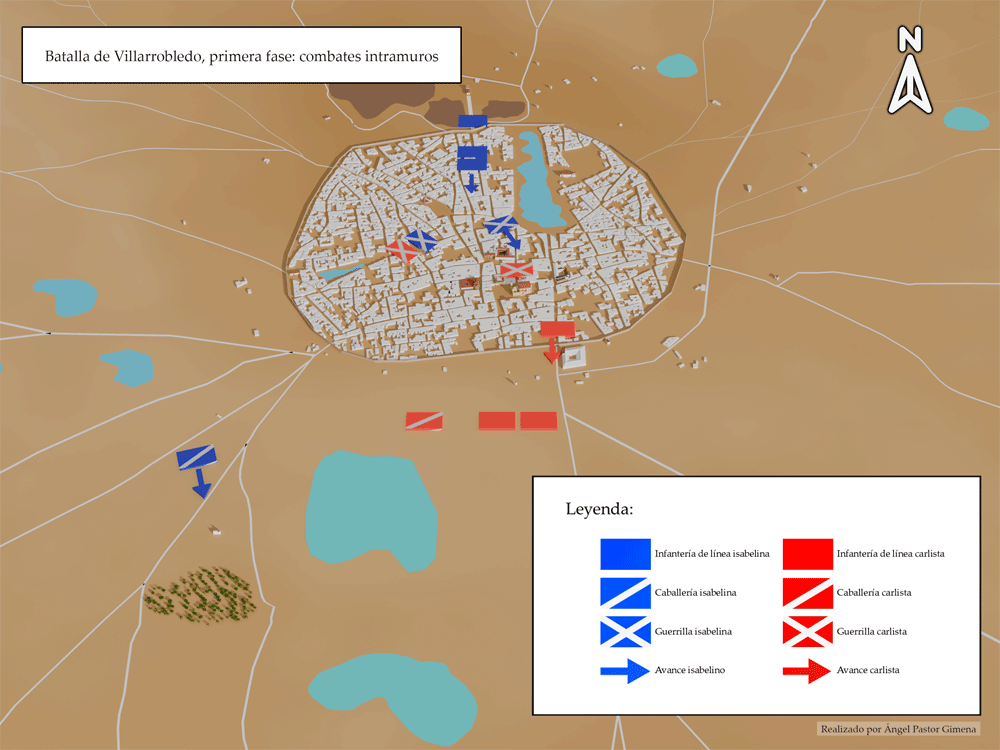
This lack of coordination allowed the Isabelline infantry to enter Villarrobledo through the northern gate, accompanied by cavalry buglers. They entered with hardly any resistance and found the Carlist contingent in disarray. On one hand, Isabelline soldiers searched house by house for members of Gómez’s column while the buglers sounded reveille as a call to action. On the other hand, the Carlists attempted to reorganise themselves as the first urban skirmishes broke out.
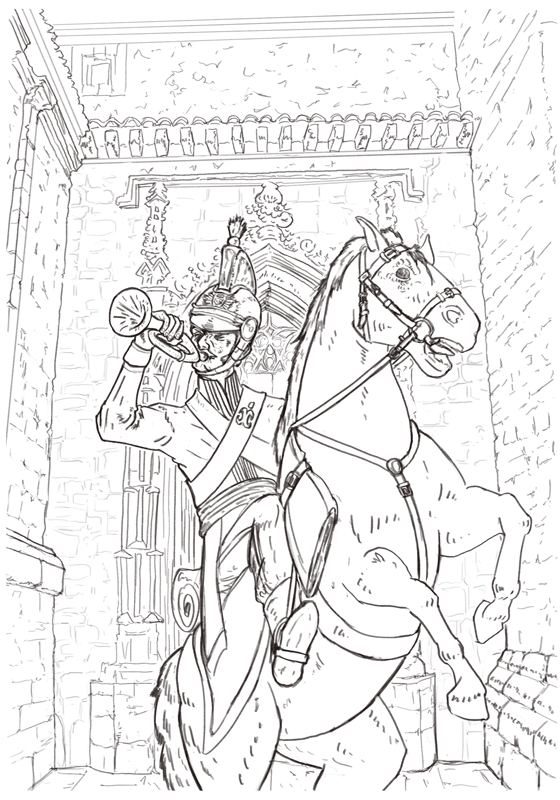
Meanwhile, Diego de León, commanding the Isabelline cavalry, circled Villarrobledo along the western limits of the town, neutralised the Carlist garrison guarding San Cristóbal, and concealed his mounted forces in a nearby olive grove.
The few Carlist troops who managed to regroup did so in a disorganised manner alongside the units that Ramón Cabrera had deployed on his own initiative the previous night in the mill cluster located in the Vega de San Cristóbal, intending to counter the Isabelline offensive.
Second Stop
Plaza de la Constitución: Lagoon of Los Carrillos
The now‑disappeared lagoon of Los Carrillos occupied a privileged position in the town, as many of the main roads structuring Villarrobledo converged there. It is also important to note that the town’s urban landscape —characterised by a large number of religious buildings— made it easier for the attacking forces to orient themselves and advance, gradually taking the town despite the resistance offered by the Carlists.
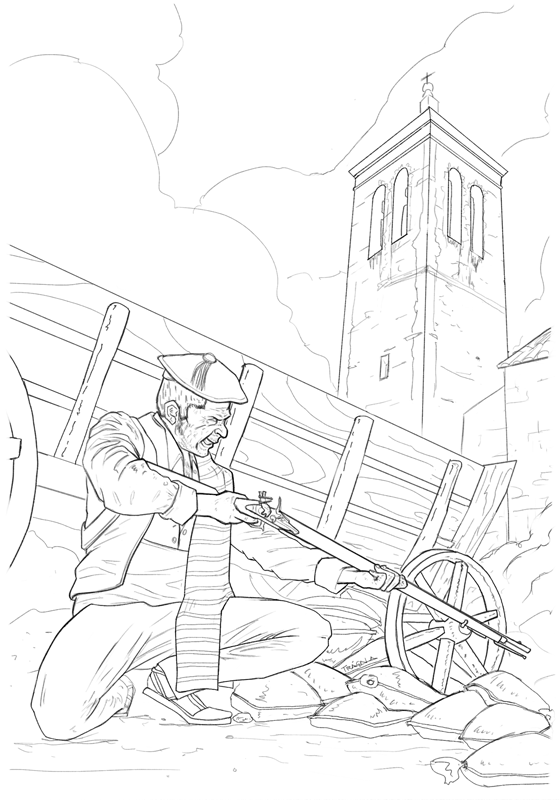
The watercourse that originated in the lagoon of Los Carrillos —today fossilised as Corredero del Agua Street— divided the town into two areas: a «lower area» to the north of the stream and a «higher area» to the south.
During the night of 19 to 20 September, Cabrera’s troops —those who had been granted permission to rest— spent the night in the lower areas, while Gómez’s forces did so in the higher areas, around Plaza Vieja, the best-defended part of the town centre.
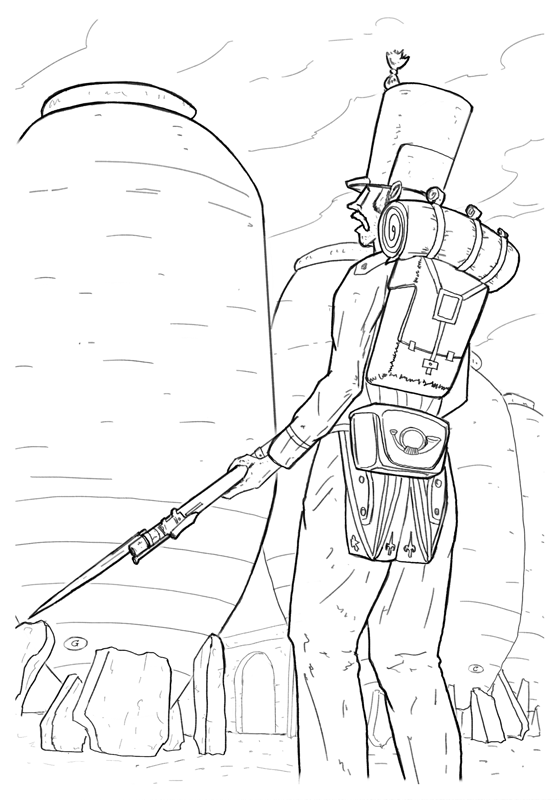
Little by little, the fighting within the town intensified. The members of Gómez and Cabrera’s column gradually regrouped, while absolutist guerrilla units hindered the persistent advance of the liberal troops.
Third Stop
Doctor Cabrera Street: House of José Morcillo Cabrera and Ana María Ortiz Moya
We are now at the house of Doctor Cabrera, a renowned Villarrobledo Jesuit of the 18th century. Miguel Gómez spent the night of 19 to 20 September here. Since Gómez dismissed the likelihood of an Isabelline attack, the troops under his command were granted permission to rest.
Being positioned in the higher area of Villarrobledo, their resistance to the attackers was more forceful, as they also benefited from the elevated terrain of the district.
The irregular urban layout of the town —combining wide and narrow streets— did not make the capture of Villarrobledo easy for Alaix, despite his claims to the contrary in his battle report.
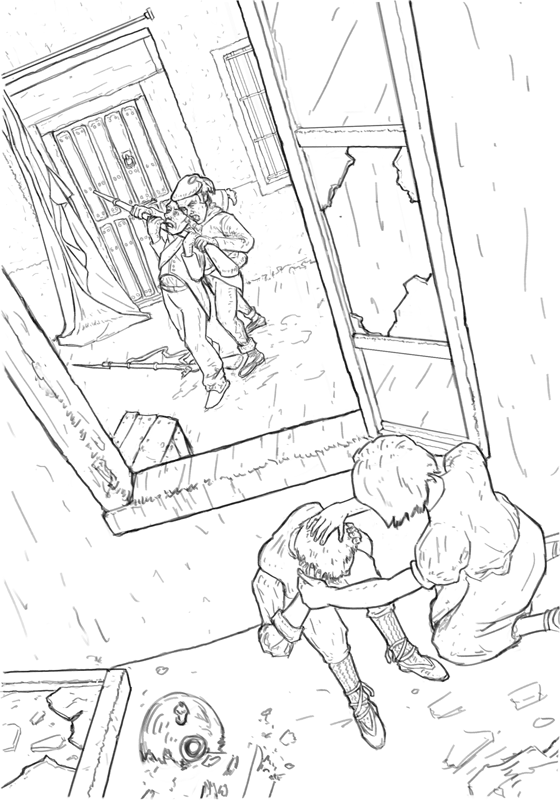
These intramural engagements had a double effect on the development of the confrontation: while the Isabellines succeeded in taking Villarrobledo, the Carlists gained time and managed to regroup in the Vega de San Cristóbal to mount the most coordinated response possible.
Second Phase: Fighting Outside the Town Walls
Fourth Stop
Intersection of Calle de la Estación and Calle de la Dolorosa
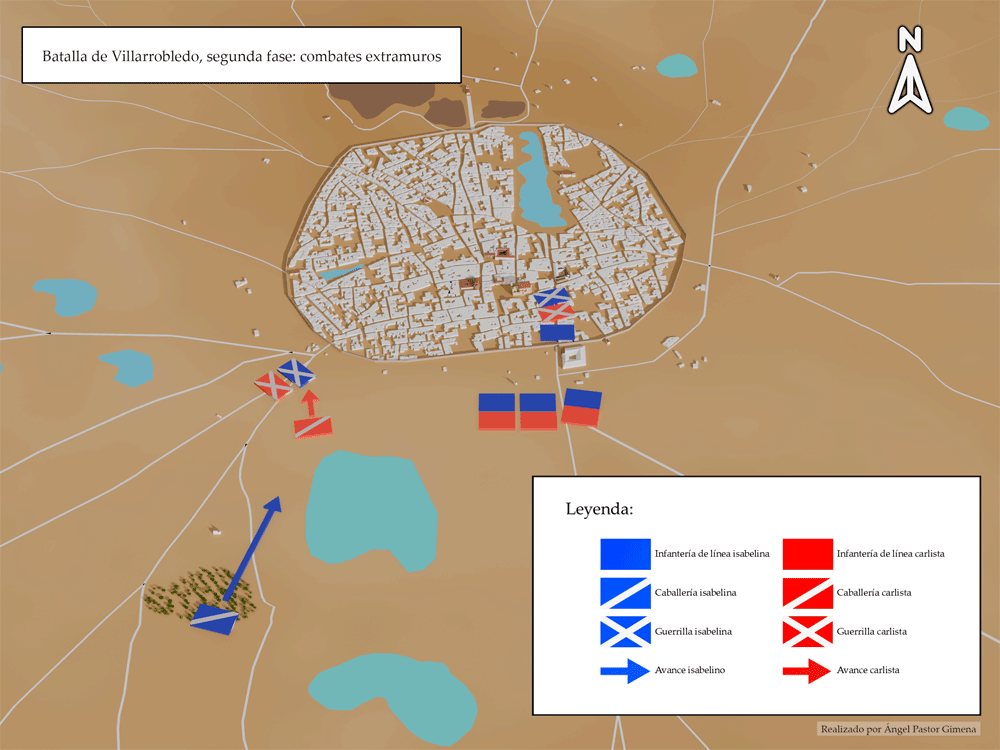
The quickest route from Plaza Vieja to the Vega de San Cristóbal was through the southeastern gate of the town wall, from which the old Andalusia road began, heading toward Munera and Alcaraz.
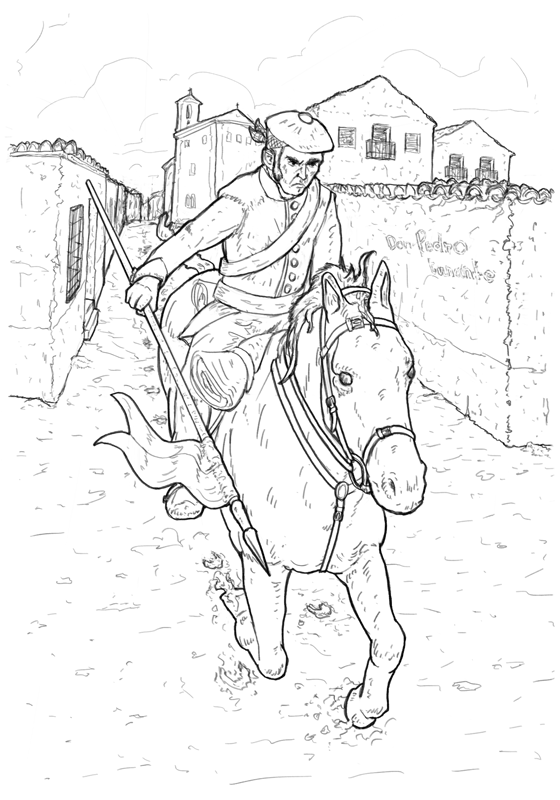
Ramón Cabrera had positioned a large part of his troops in an area of the Vega de San Cristóbal then known as Los Molinos, located on an elevation relatively close to the now-disappeared Convent of San Francisco.
Given the difficulty of coordinating street fighting —especially in view of the Isabelline superiority in those areas— and compounded by his disagreements with Gómez, Cabrera chose to deploy most of his troops in the mill cluster and resist the liberal attack there.
It is worth noting that, although holding a fortified town is generally an advantage in such contexts, the liberal breakthrough into Villarrobledo caused such disorder among the absolutist troops that, when the moment came, they preferred to fight in open terrain, outside the walls, south of the town.
Fifth Stop
Calle Nueva: Battle Overlook
We are now in the Vega de San Cristóbal itself, a point within the lacustrine plain from which almost the entire battlefield can be seen. To the left, one can make out the site of the now-vanished mill cluster where Ramón Cabrera’s Carlist forces were deployed —today occupied by railway and industrial infrastructures— directly ahead lies the full expanse of the Vega de San Cristóbal, and to the right stands the hermitage of the same name, which gives this place its identity.
This location was far enough from Villarrobledo’s walls that the troops deployed in the open field could not be reached by shots fired from the town’s defences.
Although Cabrera’s troops had been formed and organised since the previous night and were able to offer effective resistance against Alaix’s attacks, Gómez’s forces joined the battle lines in a haphazard and disorganised manner, making coordination between the two officers difficult.
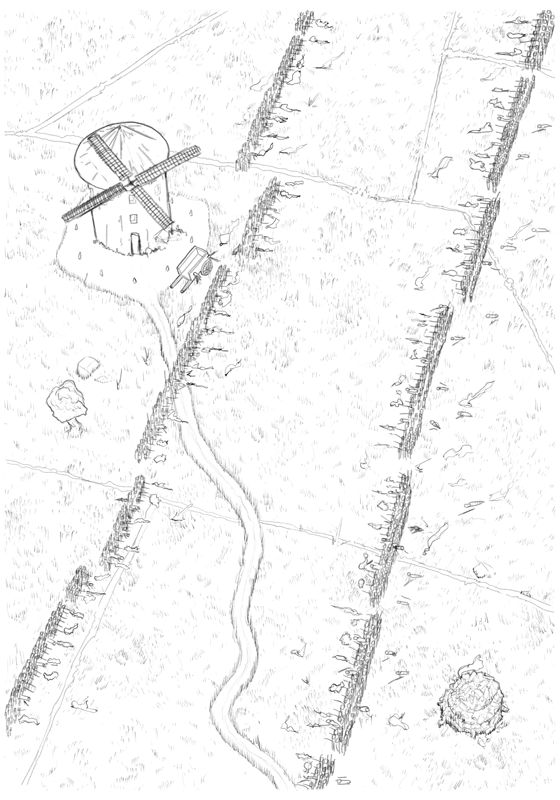
Despite having lost control of Villarrobledo, it was here that the confrontation became most brutal. Both liberal and Carlist sources agree that Ramón Cabrera’s conduct significantly balanced the course of the battle.
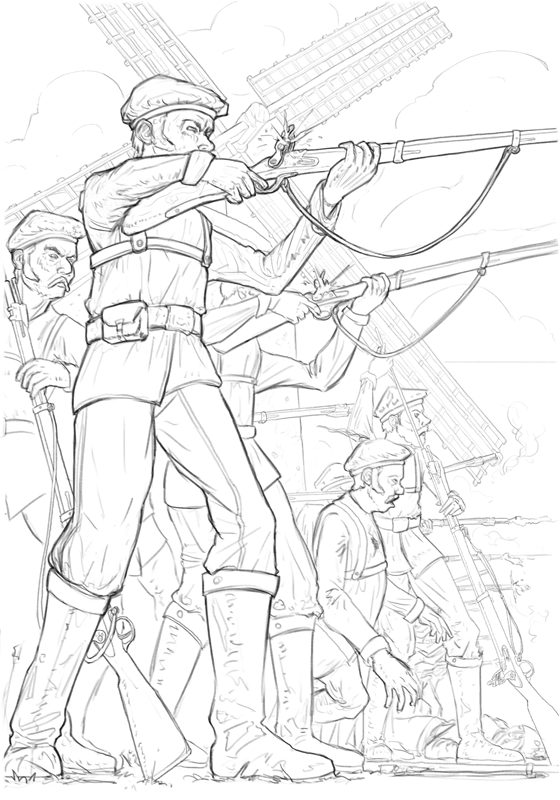
The battle lines became fixed and bogged down in a constant exchange of fire. However, the lack of coordination with Gómez’s troops —who continued arriving in a disorganised fashion at the Vega de San Cristóbal— created a breaking point for the absolutist forces, who gradually began to lose ground.
It must not be forgotten that, although the main focus of the action at this stage was the Vega de San Cristóbal, fighting was still taking place inside the town itself between the occupying troops and those attempting to regroup.
Sixth Stop
Plaza del Rollo: Western Sector of the Vega de San Cristóbal
We have reached one of the most emblematic points of the town: the now-disappeared Plaza del Rollo, located near the southwestern gate of Villarrobledo.
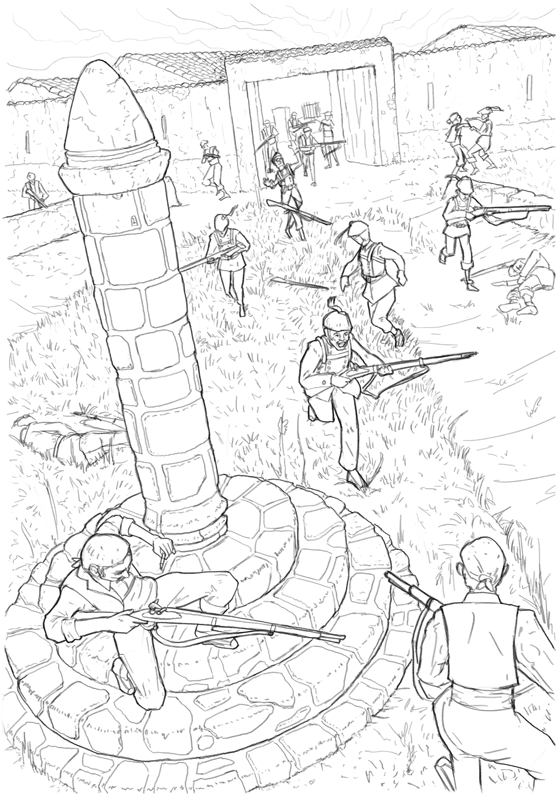
At this very site, although poorly documented, we have evidence of the effective action carried out by Isabelline guerrilla units against Carlist troops attempting to regroup with the main insurgent force from this part of the town.
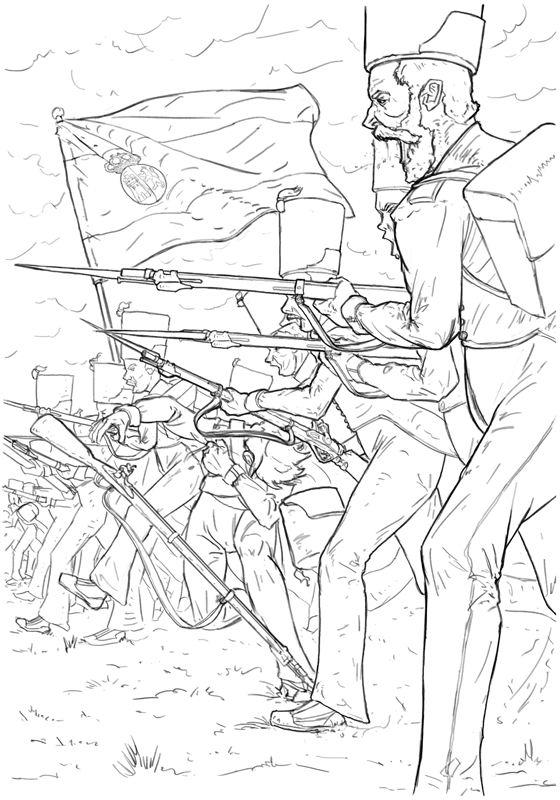
Regarding the main fighting on the plain, it should be emphasised that as the firepower of the Carlist lines weakened, the Isabelline infantry began launching increasingly determined charges against their opponents. These assaults triggered fierce clashes that either kept the line stalled or allowed modest liberal advances.
As noted earlier, the fighting in the Vega de San Cristóbal was not the only action taking place. In addition to persistent skirmishes at various points within the town, there is also evidence of Isabelline guerrilla operations at the southern gates of the wall, targeting Carlist troops still attempting to join the main engagement.
The Carlist cavalry was unable to carry out flanking manoeuvres against the main Isabelline force because it was protected by its proximity to the town walls. Nevertheless, Carlist horsemen attempted to repel the liberal guerrillas positioned at the Rollo Gate.
At one such moment, Diego de León —who had concealed his Isabelline cavalry in a nearby olive grove after neutralising the San Cristóbal garrison— took advantage of the fact that the Carlist mounted forces had left their rear unprotected. He then initiated the manoeuvres that would bring the battle to its decisive end and cement his military prestige.
Third Phase: Diego de León’s Cavalry Charges
Seventh Stop
San Cristóbal
«The plain of Villarrobledo presented a sinister and moving sight», wrote Joaquín Roa Erostarbe. Although the fighting was fierce and there even seemed to be signs that the Carlists might ultimately prevail, the truth is that the liberal forces were gradually gaining ground.
By midday, the main focus of the action was concentrated in the Vega de San Cristóbal. The course of the battle remained uncertain, despite the fact that the Isabellines were slowly advancing. Neither side had yet achieved a decisive breakthrough.
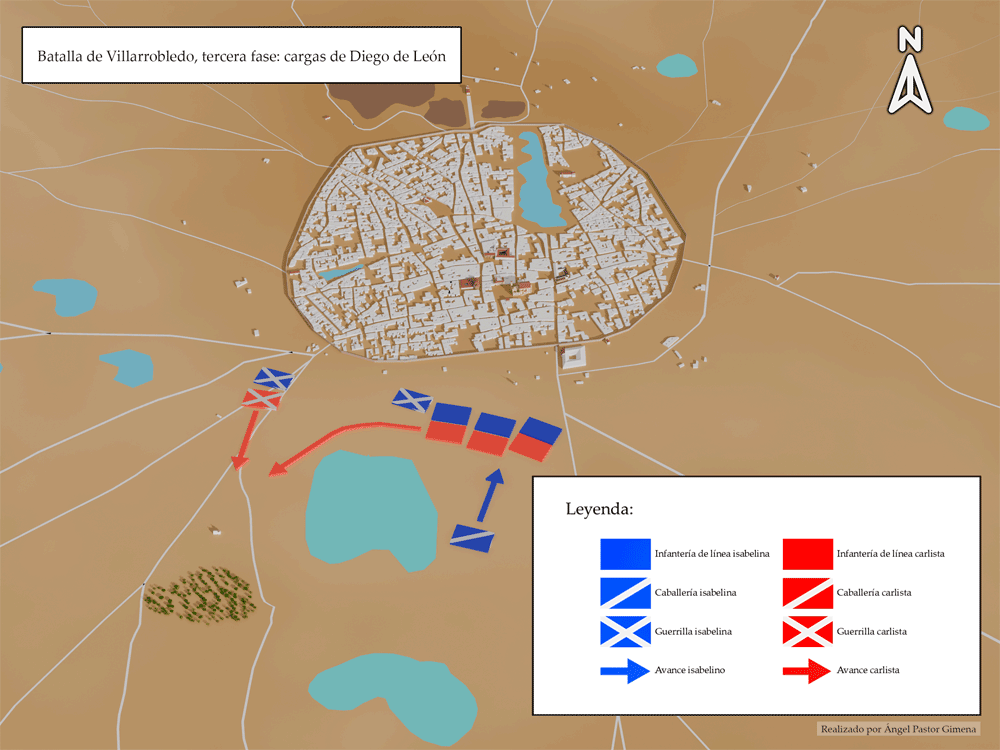
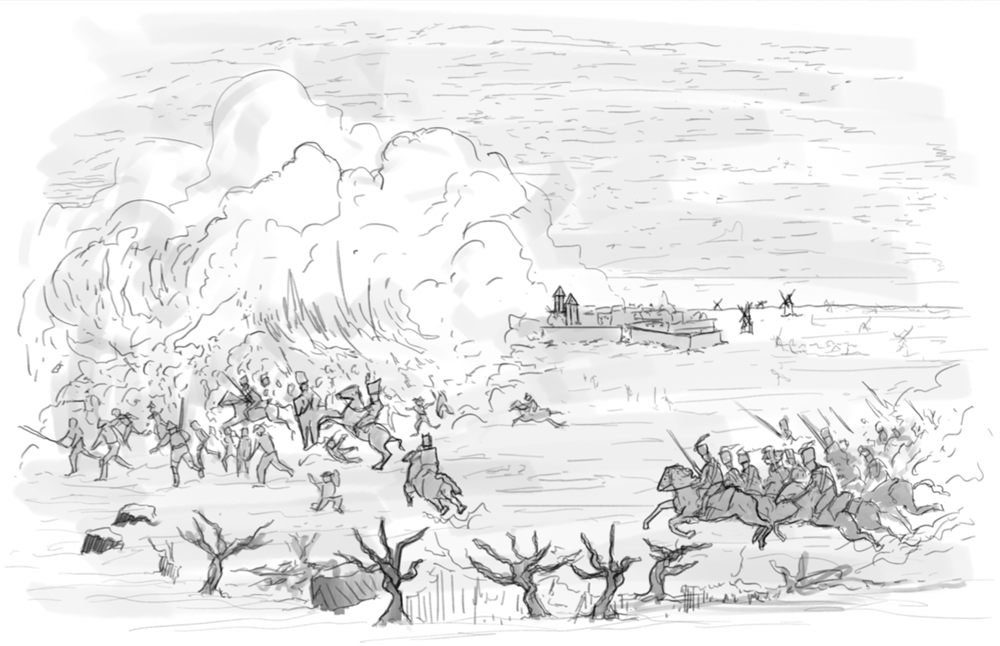
The situation changed when Diego de León’s Isabelline cavalry launched a series of charges that shattered the absolutist forces. Leaving their hiding place among the olive trees near San Cristóbal, Diego de León —at the head of the Princess’s Hussars Regiment and his lancers— first attacked the Carlist cavalry, which was attempting to neutralise the Isabelline guerrillas on the western part of the front.
With an effective feigned retreat, Diego de León scattered his Carlist counterparts, led by José Miralles «el Serrador» and Joaquín Quílez, who outnumbered the liberal horsemen by nearly five to one.
Once the absolutist mounted forces had been eliminated, Diego de León turned his attention to the infantry fighting, which had long been stalled between slight Isabelline advantage and indecision. He executed a manoeuvre that circled the now‑vanished lagoon of San Cristóbal and launched a series of charges against the rear of the Carlist infantry, ultimately forcing the final retreat of the absolutist host and securing the definitive victory of the Isabelline side.
By midday on 20 September 1836, the action at Villarrobledo had ended in victory for Isidro Alaix’s Isabelline column, which succeeded in defeating a force twice its size, thereby saving Madrid from an imminent attack that —although unlikely to make the Spanish capital capitulate— would have dealt a serious blow to the prestige of the Isabelline government.
Alaix immediately sent a report of the triumph to the Isabelline high command, which published it in the Gaceta de Madrid. It claimed that the action had been swift and that government losses were minimal. However, the reality suggests that the Carlists suffered approximately two hundred fatalities, and that —contrary to the official Isabelline report— the liberal troops sustained a number of casualties similar to that of their adversaries.
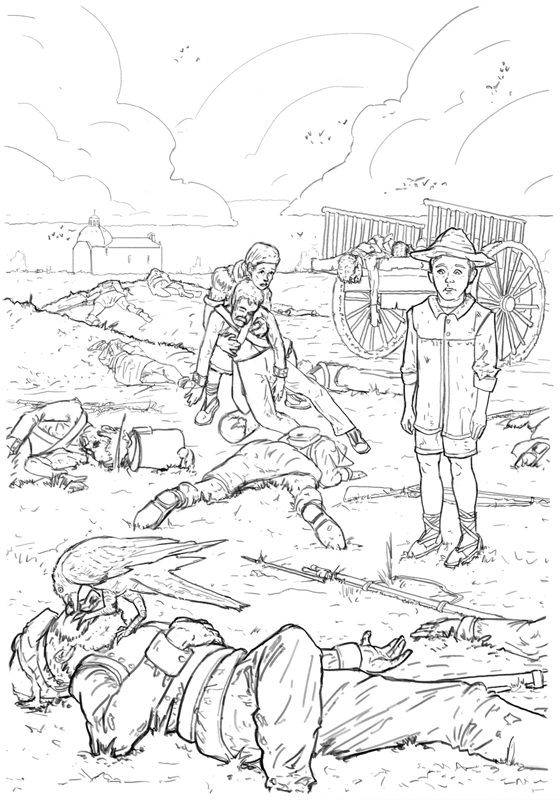
The Isabelline forces also captured between 1,200 and 1,500 prisoners, forcing them to halt the pursuit in order to properly manage the captives and the enormous amount of booty obtained. This situation proved advantageous for Gómez’s Expedition, which avoided dispersal thanks to Ramón Cabrera’s leadership and was able to continue its march —not toward Madrid, but toward the south— demonstrating the weakness of the central government’s control over the territories under its administration.
Balance
As we have seen, the Battle of Villarrobledo was a swift and forceful action, though shrouded in uncertainties. Above all, it was an Isabelline victory that prevented a Carlist column from attacking Madrid —a blow that would have severely damaged the liberal government’s prestige—.
Contrary to the claims made in the victorious army’s reports, recent research provides data that nuance and complete the traditional narrative of this historical event, now 190 years old.
The Carlist force lost approximately 200 men, in addition to 1,274 to 1,466 prisoners captured by the government side. The liberals recorded four fatalities and around sixty wounded; however, this figure has been widely debated by contemporary and modern sources, with some studies raising Isabelline losses to a number similar to that of the Carlists. Unfortunately, obtaining precise data is extremely difficult.
A propaganda and promotion campaign was organised among the victors. Isidro Alaix was promoted to general, awarded the Laureate Cross of San Fernando, and named Viscount of Villarrobledo —a title now extinct—. Diego de León was promoted to brigadier, and together with his Princess’s Hussars Regiment received his second Laureate Cross of San Fernando; he was celebrated as the «hero of Villarrobledo».
However, the later political downfall of these figures during the reign of Isabel II —Alaix’s enmity with Narváez and Diego de León’s execution for his role in the coup against Espartero— favoured the erasure of the victory at Villarrobledo from Spanish liberal memory.
Villarrobledo itself also received its own commemorations, such as the medallion engraved with the inscription: «In the fields of San Cristóbal of this town was fought the battle that the troops of General Don Isidro Alaix and the cavalry of Colonel Don Diego de León won against the Carlist factions of Gómez and Cabrera on 20 September 1836». This medallion, sadly erased at some point in the 19th century, can still be seen today on the façade of the Town Hall, bearing its corresponding damnatio memoriae.
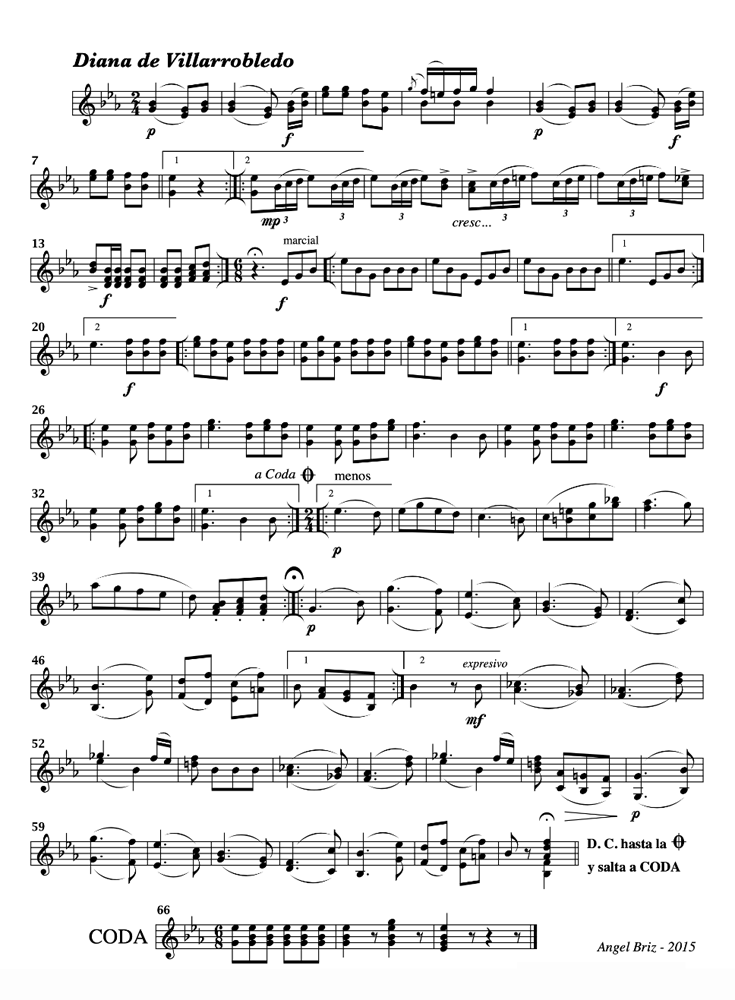
The most enduring vestige of the battle that survives to this day is the town’s unofficial anthem: the Diana de Villarrobledo, which —despite the many mysteries surrounding its origin— is undoubtedly one of the great pieces of the Spanish liberal songbook of the 19th century. An ode to freedom that sought to inspire the peoples of Europe and which Villarrobledo shares today with the town of Irún in Gipuzkoa.
The Carlists, for their part, did not undertake major efforts to publicise the episode, as it was a defeat that nearly led to the complete dispersal of the column. Moreover, the defeat at Villarrobledo became a significant factor in the future enmity between Miguel Gómez and Ramón Cabrera. Although Cabrera’s actions prevented the insurgent column from being neutralised, the battle was remembered as a setback for both officers, even though they continued the expedition some time later.
Finally, we know little about the full extent of the damage caused by the confrontation, beyond material losses and the deterioration of public infrastructure, particularly the town wall. We also lack data on civilian casualties —if any— although it is reasonable to assume that they existed, given that a significant part of the fighting took place within the town walls.
The hermitage of San Cristóbal collapsed years after the battle due to neglect and landslides affecting the hill on which it stood. Although rebuilt in the last century, its current deterioration leaves it standing as a silent witness to local history, to the tears and joys that shaped Villarrobledo. And unless action is taken to halt its decay, it will eventually be buried in the sands of oblivion.
Conclusion
The Battle of Villarrobledo was not merely an isolated skirmish. It was a military episode that helped strengthen the liberal system being established in Spain under Isabel II, her mother María Cristina of Bourbon, and above all the new liberal elites seeking to consolidate their position in various spheres of power.
The course of events made Villarrobledo the place where several second‑tier Isabelline officers gained promotions and political prominence by defeating some of the most notable figures of Carlism.
Beyond the military action itself, studying a specific period and society through a historical event is particularly enlightening. In this sense, analysing the facts within their context allows us to understand long‑term processes. Put differently, studying the Battle of Villarrobledo opens the door to understanding the Liberal Revolution not only in Spain, but also within the town itself. It situates and gives voice to the people who, unknowingly, were living through one of the processes that helped shape the society we have today.
Ultimately, studying Villarrobledo and the spaces where the battle unfolded expands our knowledge and memory not only of the town, but of the country. Visiting these places in person, preserving Historical Heritage, and recovering our collective memory —beyond the military action— immersing oneself in the Villarrobledo (or any place) that its people built in the past, strengthens our social consciousness and contributes to improving the present.